










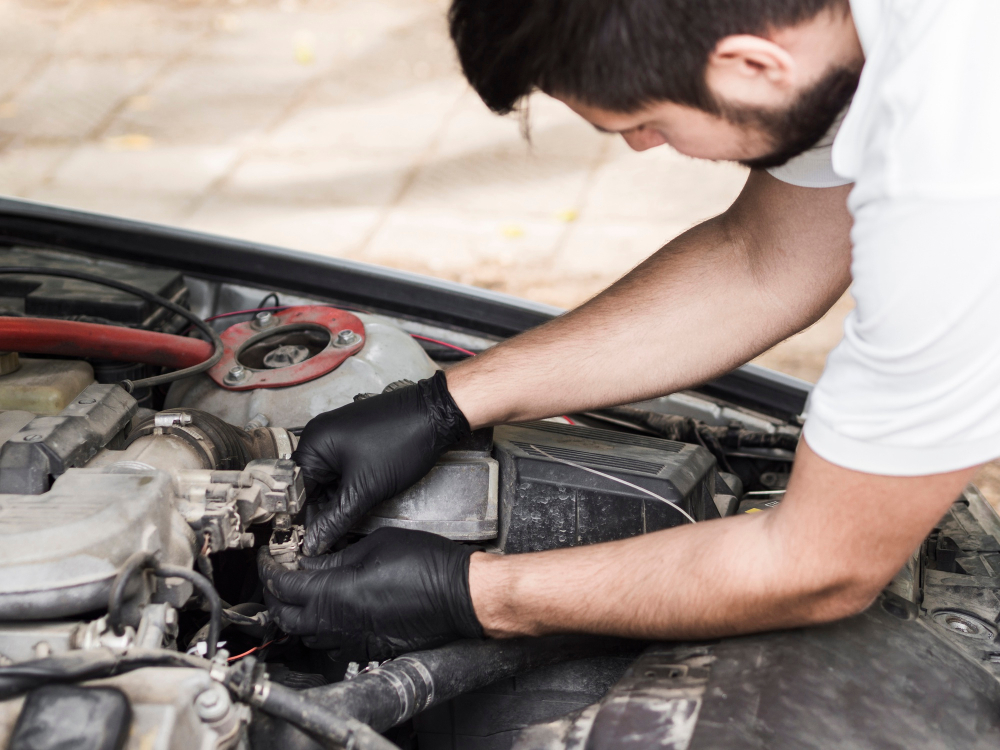
If you’ve ever noticed grease around your front wheels or heard clicking noises when turning, your car may be signaling a CV boot issue. Many drivers underestimate the importance of CV boots — small components that play a big role in your vehicle’s performance and safety. At Asian Auto Repair and Tyres, a high-quality CV boots service can save you expensive repairs down the road. Learn why CV boot replacement matters and how to know when it’s time.
What Is a CV Boot?
A CV boot (Constant Velocity boot) is a flexible rubber cover that protects the CV joint — a part of the axle that allows wheels to rotate smoothly while handling steering and suspension movement.
The CV joint is packed with grease that keeps parts moving smoothly. The boot holds that grease in place and keeps dirt, water, and debris out. When the boot is intact, your car’s steering and wheel motion stay precise and reliable.
Why CV Boots Need to Be Replaced
Even though CV boots are small and often overlooked, they work under constant pressure and motion. Over time, the rubber material wears out due to:
Heat exposure
Road debris impact
Ageing and cracking
Oil and chemical damage
When the boot cracks or tears, grease leaks out and contaminants get in. This rapidly accelerates CV joint wear, leading to more extensive damage.
The Cost of Ignoring a Faulty CV Boot
Ignoring a torn CV boot can quickly turn a low-cost job into an expensive one:
Problem Typical Cost Impact
CV Boot Replacement ✔ Low cost (routine service)
CV Joint Wear ❗ Mid cost (needs part rebuild)
CV Axle Replacement ❗❗ High cost (major component)
Wheel Bearing / Suspension Damage ❗❗❗ Very High
A damaged CV boot can eventually damage the CV joint itself meaning instead of replacing a boot, you’ll be replacing the entire axle assembly. Early detection and replacement save money and extend vehicle life.
Signs You Need a CV Boot Replacement
- Grease on the Inside of Your Wheels
If you see dark, greasy splatter on the inside of the wheel rim or under the car, it’s usually grease escaping from a torn boot.
- Clicking or Popping Noises When Turning
A loud clicking or popping sound when making sharp turns is a classic symptom of a worn CV joint. This often means the boot failed long ago and now the joint itself is damaged.
- Vibration During Acceleration
If the car vibrates or shudders when accelerating, it could be due to a compromised CV joint losing smooth rotational control.
- Visible Cracks or Tears in the Boot
Physical damage is the most obvious sign. Regular inspections can catch a failing boot before it leads to bigger trouble.
CV Boot Replacement at Asian Auto Repair and Tyres
At Asian Auto Repair and Tyres, CV boot inspection and replacement is performed by experienced automotive technicians using premium parts. Our service includes:
✔ Thorough inspection of axles and boots
✔ High-quality replacement boots and clamps
✔ Greasing and sealing to manufacturer specs
✔ Road test to confirm smooth operation
Learn more at our service page: 👉 https://asianautorepairandtyres.com.au/service/cv-boots/
Our team ensures your vehicle stays reliable and safe, whether you’re commuting daily or planning a long road trip.
How Long Does a CV Boot Last?
Typically, a CV boot can last 80,000–100,000 km or more under normal driving conditions. However, harsher environments, frequent rough roads, and extreme temperatures can shorten this lifespan. Regular checks during service appointments ensure potential issues are spotted early.
Maintenance Tips to Prolong CV Boot Life
Regular Inspections
During every tyre rotation or wheel alignment, ask your technician to check CV boots for cracks, dry-rot, or grease loss.
Avoid Rough Road Hazards
Hitting potholes and curbs can damage the boot. Drive cautiously to protect suspension and axle components.
Clean After Off-Road Driving
Mud, rocks, and debris can cling to CV boots and wear them prematurely. A quick wash after off-road use helps prolong life.
Frequently Asked Questions
Q: Can I drive with a torn CV boot?
A: You might be able to drive short distances, but continued driving can cause rapid CV joint failure — leading to more costly repairs.
Q: How much does CV boot replacement cost?
A: Costs can vary by vehicle type, but boot replacement is generally affordable compared to full joint or axle replacement. Get a quote from your service provider for accurate pricing.
Q: Is CV boot replacement a major job?
A: It’s a common repair performed routinely in most auto workshops. Skilled technicians can complete it efficiently.
Q: How long does the replacement take?
A: Typically 1–2 hours, depending on axle accessibility and vehicle design.
Q: Will a torn boot ruin my CV joint immediately?
A: Not immediately, but contamination and grease loss will accelerate wear, so early replacement is important.
Q: Are all CV boots the same?
A: No. CV boots vary by vehicle model and axle design. Always use quality parts specified for your car.
Final Thought
Your vehicle’s CV boots might be small, but they play a crucial role in smooth, safe driving. A proactive approach to inspection and timely CV boot replacement protects your CV joints and helps avoid costly repairs later. Whether you’re servicing a family sedan, SUV, or 4×4, quality maintenance from professionals keeps you moving with confidence.
Post a comment
Related Posts

March 12, 2026
Mitchell Auto Centre Reliable Car Repair and Tyre Services in Mitchell
When it comes to maintaining your vehicle’s performance, safety, and reliability, choosing a trusted automotive…
March 3, 2026
Car Puncture Repair Near Me: Quick, Reliable & Affordable Solutions
A flat tyre can happen to anyone at the busiest time of the day, on…
February 26, 2026
Expert Car Mechanics in Canberra: Your Guide to Reliable Repairs
Reliable car mechanics are essential for Canberra drivers navigating busy roads and varying weather. Asian…
February 12, 2026
Clutch Repairs in Mitchell: Expert Service You Can Trust
Clutch issues can turn a simple drive into a frustrating ordeal, but in Mitchell, reliable…